
Consolidating Your Stack: What the Deno-Cloudflare Merger Means for API Reliability
Evaluate how infrastructure consolidation impacts your API workflow and learn how decoupling verification logic maintains reliable data hygiene.
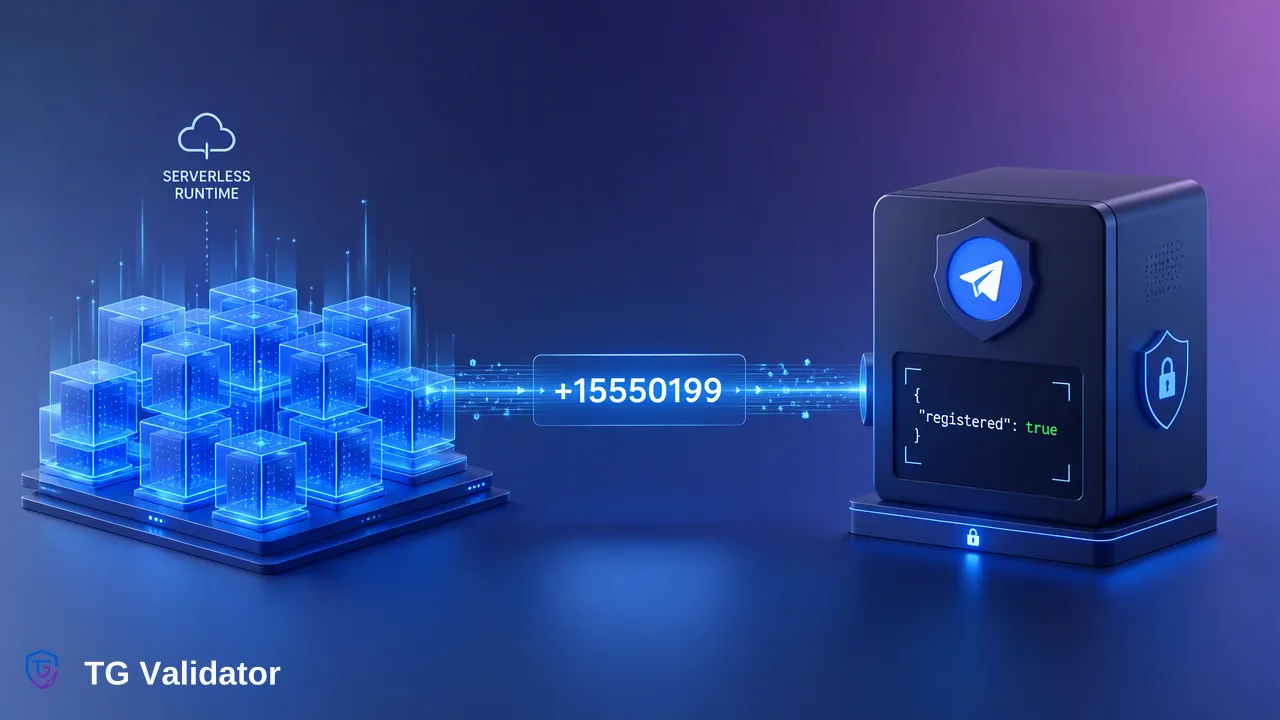
Infrastructure consolidation often promises operational efficiency, but it can introduce hidden risks to data pipelines. Decoupling verification logic through a platform-agnostic API workflow helps teams maintain data hygiene across evolving hosting environments.
The acquisition of Deno by Cloudflare highlights a continuing industry transition toward unified edge computing environments. While consolidating hosting layers simplifies deployment configurations, it creates architectural risks when teams assume platform-native utilities handle underlying data quality. To maintain high verification standards across shifting infrastructure, engineering teams benefit from decoupling verification logic from runtime environments, relying on standardized, platform-agnostic API workflows that process normalized inputs independently.
The Hidden Cost of Infrastructure Consolidation
Industry consolidation often promises operational simplicity, yet it can introduce subtle vulnerabilities into critical messaging and intake pipelines. The announcement that the Deno team has joined Cloudflare, detailed by Cloudflare acquires Deno, represents a major step toward unifying serverless execution, distributed state, and edge networking under a single ecosystem.
For engineering organizations, shifting workloads to consolidated edge platforms streamlines build configurations and hosting management. However, consolidation does not resolve core data quality at the point of ingestion. When development teams treat modern execution runtimes as all-encompassing solutions, they risk building black-box architectures. In these configurations, developers occasionally assume the underlying hosting platform or edge gateway inherently handles data hygiene. When validation logic is tangled with environment-specific deployment scripts, subsequent runtime changes or platform shifts can destabilize verification pipelines, leading to downstream operational costs.
Decoupling Verification from the Hosting Stack
Maintaining stable messaging pipelines requires clear boundaries between where code runs and how data validity is determined. Coupling validation routines to specific runtime features creates friction whenever the hosting layer changes or introduces breaking updates.
Separating verification into dedicated, platform-agnostic services helps organizations insulate their core data contracts. Instead of writing proprietary checks directly into edge worker handlers, applications pass candidate records to a specialized verification interface. A platform-agnostic REST API provides consistent evaluation criteria regardless of whether the calling system is deployed on Cloudflare Workers, a standalone container, or an internal server.
This separation of concerns supports system modularity. When infrastructure teams decide to update runtime runtimes or rebalance traffic across multi-cloud regions, the underlying verification logic remains stable and unaffected by the migration.
Maintaining Data Reliability with Standardized API Workflows
A resilient verification pipeline relies on clean input standards and deterministic response handling. Within a dedicated Telegram validation workflow, integrating with TG Validator demonstrates how standardizing interface specifications insulates applications from hosting shifts.
The service utilizes a standard REST API authenticated through an X-API-Key request header carrying an sk_ prefixed credential. Single-identifier registration lookups interact with the POST /api/v1/check endpoint by transmitting a concise JSON payload:
{"service_type":"tg","identifier":"<E.164 number>"}
Incoming phone numbers should strictly adhere to ITU-T Recommendation E.164, which specifies international telecommunication numbers starting with a country code and containing no more than 15 digits. Normalizing data at the boundary standardizes formatting across distributed intake forms.
The endpoint operates through a synchronous same-response workflow rather than asynchronous polling. The response uses a standard envelope consisting of code, msg, and data. When a check is complete, the data object contains service_type, identifier, and the boolean field registered. It indicates whether an account exists on Telegram, rather than proving active usage, identity, or ownership. If a check cannot be completed, the API returns a non-zero business code without a completed result object, allowing calling systems to route undetermined checks into review workflows.
Audit Checklist for API Workflows During Stack Changes
When navigating platform consolidation or runtime migrations, technical teams can use the following checklist to evaluate their data intake pipelines:
1. Inventory Runtime Dependencies
Review codebase repositories to identify platform-specific validation packages or native bindings that cannot easily transition across edge environments.
2. Standardize Ingestion Schemas
Normalize all incoming phone identifiers to the E.164 standard before routing them into downstream business logic, eliminating country-specific syntax variations.
3. Externalize Verification Endpoints
Implement validation via stable REST endpoints using explicit authentication headers and standardized JSON envelopes, keeping verification tasks independent of hosting providers.
4. Implement Deterministic Business Code Handling
Ensure downstream logic explicitly handles both successful completions and non-zero business codes. When an API returns an undecided status, route the record to fallback queues rather than assuming delivery status.
5. Review Usage and Concurrency Controls
Examine concurrency controls and timeout settings documented in current API guides to align batching and real-time requests with platform capacities.
FAQ
Why is decoupling verification logic important during infrastructure migrations?
Hosting migrations and runtime consolidations frequently alter internal middleware, request lifecycles, and environment bindings. When verification rules sit directly inside a specialized runtime, moving between platforms requires rewriting validation code. Decoupling verification into an external API workflow isolates business logic, supporting uniform data assessment across any compute stack.
How does a platform-agnostic API improve data reliability?
A platform-agnostic integration operates via predictable HTTP contracts rather than proprietary runtime libraries. By interacting through standardized request headers and documented envelopes, teams establish consistent validation pipelines that behave uniformly whether running on edge workers, traditional containers, or serverless functions.
What role does E.164 normalization play in API workflow stability?
Phone identifiers vary significantly across regional input forms. Standardizing inputs to the international formatting defined by ITU-T Recommendation E.164 removes syntax ambiguity before queries reach downstream verification endpoints. This consistency helps prevent formatting rejections and keeps intake pipelines clean.
Learn More
Choose the product information that fits the next step in your workflow.