
Product guidance
Optimizing Outbound Outreach: Integrating Telegram Registration Checks
Learn how to clean a calling list before outreach by integrating synchronous Telegram registration checks to inform your team's prioritization workflow.
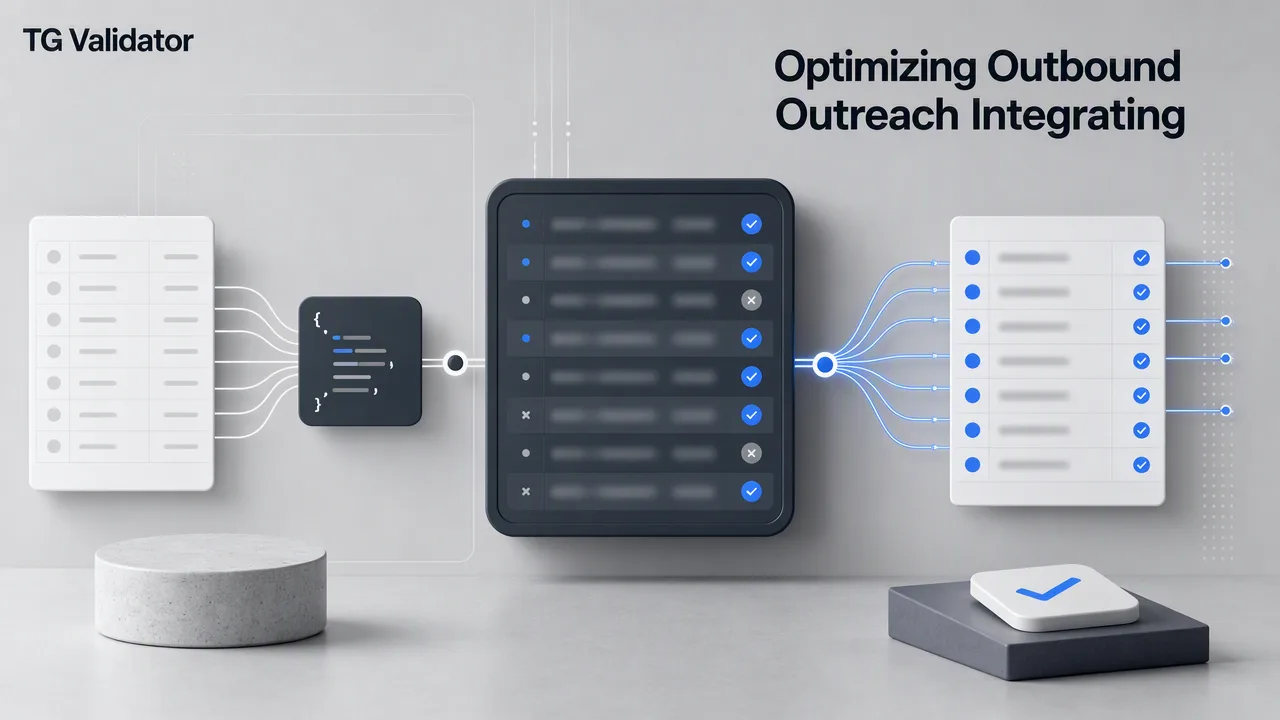
Learn how to enrich outbound calling lists with Telegram registration signals using the TG Validator API to inform record prioritization.
Before your representatives begin dialing, you can clean a calling list before outreach by verifying which phone numbers are registered on Telegram. Using the TG Validator API, teams can programmatically check Telegram registration status through a synchronous request. This account-presence signal helps your team prioritize records based on documented platform presence, ensuring your outbound strategy is informed by verified data. Integrating this check into your workflow supports more structured segmentation before any calls are placed.
The Role of Platform Signals in Outbound Strategy
When preparing contact records for an outbound campaign, having context about a phone number's platform presence helps teams segment and prioritize their lists. TG Validator is a focused Telegram-verification product that provides a point-in-time registration signal. By checking whether a number is registered on Telegram, operations teams can route records to the appropriate representatives or adjust their outreach workflows accordingly. It is important to understand the boundaries of this signal. A registered result reports the Telegram registration status at the exact time of the check. Furthermore, it does not indicate whether the number can be successfully contacted or if the user is currently online. Instead, this data point acts as one input alongside other checks, supporting internal decisions on how to organize a calling list before outreach begins.
Technical Workflow for Integrating TG Validator
Integrating Telegram registration checks into your existing CRM or dialer workflow requires connecting to the TG Validator REST API. The product operates on a synchronous model, meaning one request returns one result in the same HTTP response.
To initiate a check, your system must send a request to the documented endpoint: POST /api/v1/check. The request requires an X-API-Key header for authentication and a Content-Type: application/json header. The JSON body must include the target phone number formatted to the E.164 international standard, along with the specific service type. The required payload structure is {"service_type": "tg", "identifier": "<E.164 number>"}.
For a completed Telegram check, the returned data contains only service_type, identifier, and registered; internal record, transaction, status, and billing fields are not returned.
Managing Throughput and API Limits
When processing lists programmatically, client-side applications must be designed to handle the documented API usage controls safely. TG Validator enforces strict throughput boundaries to maintain operational stability during synchronous checks. The public API documentation describes a strict concurrency limit per user and is the place to check the value in force. The synchronous batch endpoint accepts up to 100 identifiers and returns the completed batch in the initiating response; your integration should still manage its own in-flight requests within the documented ceiling. If your application exceeds these boundaries, the API will return specific error codes for either an all-concurrency-slots-occupied event or a check that ran out of time. Concurrency rejections and timeouts are not charged to your account balance and do not create a check result. Implementing exponential backoff and retry logic in your client application helps manage these limits gracefully when you clean a calling list before outreach.
Account use
Understanding the billing mechanics and error handling is a critical part of integrating the API into your outbound workflow. TG Validator operates on a pay-per-check billing model.
Failed, timed-out, and undetermined checks do not retain the charge. See the pricing page for current billing details.
For a completed Telegram check, the returned data contains only service_type, identifier, and registered; internal record, transaction, status, and billing fields are not returned.
Monitoring and Reporting via the Developer Dashboard
Beyond the API integration, TG Validator provides a developer dashboard to help operations and engineering teams manage their account and monitor usage trends. This interface supports the administrative side of your list-cleaning workflow. Through the dashboard, users can manage their API keys, monitor their current balance, and review their check history. The platform offers detailed usage reports, allowing teams to view recent checks, track balance spend, and analyze account activity. This visibility helps administrators adjust their list processing volume based on historical throughput and remaining funds. For teams evaluating the platform before fully integrating it into their outbound dialing strategy, new accounts can contact support to receive 100 free checks, then try the service specifically for Telegram registration checks. This allows developers to test the synchronous request flow, validate E.164 inputs, and confirm the response envelope structure in a live environment.
FAQ
What format must phone numbers be in for verification?
All phone numbers submitted to the TG Validator API must be formatted according to the E.164 international telephone numbering standard. Requests with invalid phone numbers will return a documented error code.
How does the API handle concurrency limits?
The API enforces a concurrency limit per user, published in the API documentation. Requests that exceed these limits are rejected, are not charged to your balance, and do not generate a check result.
Can I check multiple numbers in a single batch request?
Yes. Submit up to 100 E.164-formatted identifiers to the synchronous batch endpoint. Use the single-check endpoint for one number, split larger lists into groups of 100, and manage in-flight requests within the documented concurrency limit.
What happens if a registration check fails?
Failed, timed-out, and undetermined checks do not retain the charge. See the pricing page for current billing details.