
Product guidance
Data Privacy and Compliance in Global Phone Verification Workflows
Learn how data privacy for phone verification services relies on data minimization, E.164 formatting, and clear controller-processor relationships.
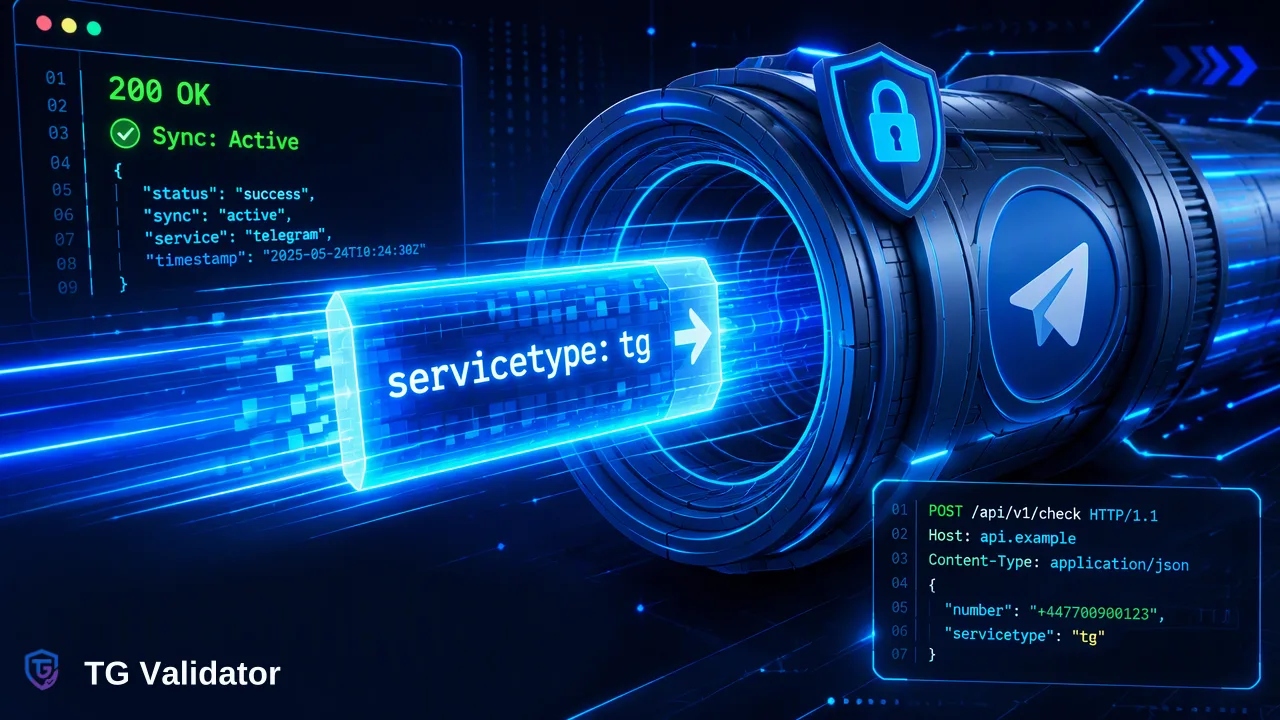
A strategic guide for technical teams on balancing operational verification needs with rigorous data protection standards, focusing on data minimization and secure routing.
In global phone verification, organizations act as data controllers, while verification services function as data processors. When evaluating data privacy for phone verification services, technical teams must understand how synchronous workflows and strict payload constraints safeguard personally identifiable information during international routing.
The Role of Data Controllers and Processors in Verification
Organizations collecting phone numbers for CRM, support, or operational workflows determine the purpose of processing, making them data controllers under standard privacy frameworks. When these organizations query a platform like TG Validator to check Telegram registration status, the verification service acts as a data processor. Processors operate under strict instructions to handle data only for the requested check. This separation of responsibilities means that the entity collecting the data remains accountable for user consent and overarching privacy policies, while the processor focuses solely on executing the technical validation. A secure processor does not repurpose the submitted identifiers for independent marketing, unauthorized profiling, or cross-customer data pooling. By establishing a clear controller-processor relationship, teams can integrate verification APIs into their infrastructure while maintaining alignment with global data protection standards. Processors provide secure environments for managing these operations; for example, a developer dashboard supports API key management, usage reports, and check history, allowing controllers to audit their usage securely.
Data Minimization: A Privacy-First Strategy
Data minimization is a core principle of modern privacy frameworks, requiring organizations to process only the data strictly necessary for a specific task. In the context of phone verification, this means stripping away names, email addresses, account histories, and other personally identifiable information before transmitting a request. Developers should configure their systems to send only the isolated phone number. For TG Validator, the API enforces this minimization by requiring numbers to be submitted strictly in E.164 format. The documented request contract for the POST /api/v1/check endpoint accepts a JSON body containing only the service_type (set to tg) and the identifier (the E.164 number), authenticated via an X-API-Key header. By restricting the payload to these minimal fields, organizations limit their exposure. Whether submitting a single identifier or utilizing the synchronous batch endpoint—which accepts up to 100 identifiers in one request and returns the whole batch or fails as a whole—the principle remains the same: transmit only the exact data point required to obtain the reachability signal.
Navigating International Routing and Compliance
Phone verification queries inherently involve interacting with international telecommunications networks and platform architectures. When a controller requests a registration check, the processor must route that query to determine if the number is active on the target platform. This routing introduces privacy considerations, as data traverses various network layers. To mitigate risks associated with prolonged data exposure, compliance-focused teams often prefer synchronous workflows over asynchronous task-submission, polling, or callback mechanisms. TG Validator provides a synchronous REST API where a single-number request or a batch request returns the result in the same HTTP response. Furthermore, organizations must design safe client-side handling by respecting documented per-user concurrency and timeout controls, ensuring that network requests are managed efficiently without overwhelming the processor or leaving connections open unnecessarily. If a check cannot be decided due to network conditions, the API returns a non-zero business code rather than a completed result object, avoiding the storage of ambiguous data.
Defining the Scope of Verification Signals
A critical aspect of data privacy is ensuring that the outputs of a verification process are not misinterpreted or misused. When a service returns a positive result, teams must understand the exact boundaries of that data to avoid making unsupported assumptions about the user. The public check contract for TG Validator returns an outer response envelope consisting of code, msg, and data. The public data object contains service_type, identifier, and registered. The registered field is a boolean value indicating a completed, decided check. By treating the signal solely as an account-presence indicator, organizations avoid the over-extension of data and align their internal workflows with accurate, privacy-conscious data interpretation. This scoped approach helps route records and informs review processes without violating compliance boundaries.
FAQ
What is the difference between a data controller and a data processor in verification workflows?
The data controller is the organization that determines the purpose and means of processing personal data, such as a business collecting contact information for its CRM. The data processor is the verification service that executes the technical check on behalf of the controller, following strict data handling instructions without repurposing the submitted identifiers for independent use.
How does data minimization support user privacy during API checks?
Data minimization supports privacy by ensuring that only the absolute minimum information required for a task is transmitted over the network. In verification workflows, this involves stripping all personally identifiable information, such as names or email addresses, from the payload. Systems should be configured to send only the isolated phone number, reducing the risk of exposing sensitive user details during the transaction.
Why is E.164 formatting important for data privacy and system architecture?
E.164 formatting provides an internationally standardized structure for phone numbers, ensuring that the identifier is processed accurately without requiring additional regional context, localized metadata, or user details. By standardizing inputs to E.164, organizations can enforce strict payload constraints, sending only the necessary identifier to the processor and maintaining rigorous data minimization practices.
How do synchronous API workflows support data protection standards?
Synchronous API workflows return the verification result in the same HTTP response as the initial request. This reduces the duration of data exposure during the routing process.
How should systems handle verification checks that cannot be decided?
If a verification check cannot be decided due to network routing issues or timeouts, the system should not interpret this as a definitive negative or positive result. Instead, the API returns a non-zero business code without a completed result object. Teams should design their client-side logic to handle these specific error codes gracefully, ensuring that undetermined records are flagged for later review rather than misclassified.