
Beyond the Coffee Machine: Why Your Infrastructure Needs Real-Time Data Audits
Learn why real-time data validation and pre-sending audits protect messaging pipelines and prevent costly operational bloat across contact infrastructure.
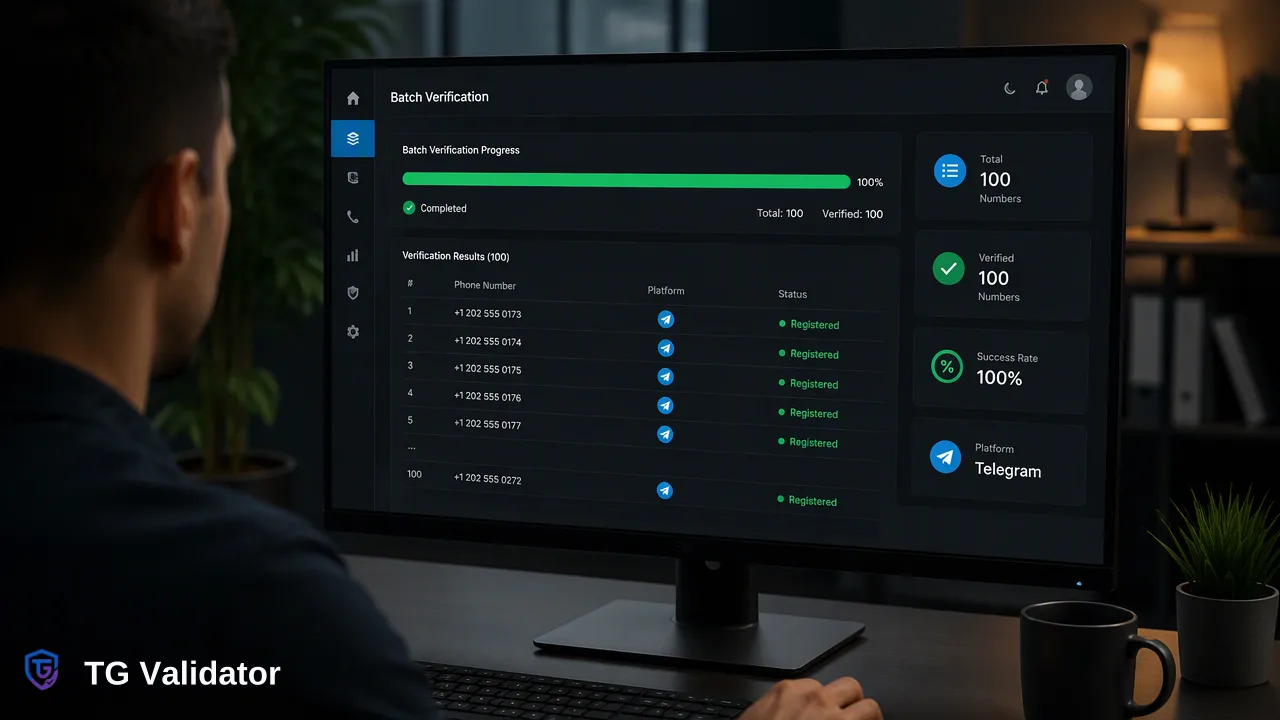
Unchecked automated infrastructure leads to silent operational bloat. Discover how real-time data validation and pre-sending audits keep messaging pipelines efficient.
A viral incident involving an automated home device illustrates a widespread vulnerability across modern infrastructure: unmonitored systems quietly consuming resources. When an IT professional discovered his parents' smart coffee maker had broadcast 1TB of traffic across ten days due to an internal firmware glitch, the device saturated their local wireless access point. In digital messaging and customer operations, unchecked contact pipelines create an identical operational drain. Without proactive data validation, automated routing systems continuously transmit requests to inactive, non-existent, or malformed entries. Establishing real-time data audits acts as an operational gatekeeper, helping engineering and operations teams verify platform account presence before campaign execution to maintain lean, predictable infrastructure.
The Hidden Cost of Unmonitored Automated Workflows
Connected hardware and automated software pipelines share a common vulnerability: the tendency for background processes to run unnoticed until severe resource exhaustion occurs. In a widely reported case shared on social media and documented by tech publications, a network administrator tracking home bandwidth discovered that his parents' connected coffee maker had transmitted 1TB of data within ten days. The appliance had developed an internal loop that saturated the local Wi-Fi access point before the administrator intervened.
Enterprise messaging pipelines experience an equivalent form of silent saturation when teams adopt an unmonitored approach to contact lists. Automated dispatchers, transactional notification systems, and CRM integrations continuously push data outward. When these lists accumulate decommissioned phone numbers, formatting errors, or non-registered identifiers, outbound servers expend compute cycles, gateway capacity, and API allocations on unreachable destinations.
Unchecked contact bloat creates compounding technical debt across communication pipelines:
Unnecessary network traffic that consumes gateway bandwidth and worker concurrency.
Database fragmentation and bloated storage allocations that slow reporting queries.
Distorted delivery metrics that obscure genuine engagement trends.
Auditing data inputs before transmission provides the necessary visibility to halt resource leaks before they affect broader systems.
Validation as an Operational Filter and Compliance Gatekeeper
Proactive data validation establishes a structural filter at the boundaries of communication infrastructure. Rather than discovering delivery failures after message dispatch, teams inspect identifiers prior to queuing outbound tasks.
Effective validation begins with structural standardization. The foundational standard for telecommunication routing is defined by ITU-T Recommendation E.164, which establishes that an international number must start with a valid country code and contain no more than 15 digits. Enforcing strict E.164 normalization strips out formatting anomalies, invalid prefixes, and malformed characters before data enters downstream databases.
Beyond technical formatting, auditing input data reinforces regulatory best practices. Under GDPR Article 5 (Regulation (EU) 2016/679), organizations must ensure that personal data is adequate, relevant, and limited to what is necessary for processing purposes. Systematically filtering inactive or non-registered records aligns operational storage with data minimisation principles, ensuring infrastructure retains only actionable information.
Auditing Messaging Infrastructure: Real-Time and Bulk Verification
To maintain clean pipelines, platforms like TG Validator provide dedicated Telegram checking infrastructure via a SaaS dashboard and REST API. Applying these checks helps technical teams determine whether target destinations maintain account presence before dispatching high-volume workflows.
Real-Time Synchronous Checking
For transactional triggers, user onboarding, or real-time CRM updates, developers integrate single-number checks using POST /api/v1/check. Submitting an E.164 phone number with the tg service type returns an immediate JSON response containing the public envelope (code, msg, data) and a completed boolean registered signal. For small batches within the same request flow, POST /api/v1/batch-check handles up to 100 identifiers synchronously without requiring background polling.
API integrations operate under documented per-user concurrency controls (such as five in-flight checks) and response timeouts. Applicable limits are detailed in the official API documentation.
Asynchronous Bulk Task Processing
When auditing extensive legacy databases or large marketing lists, organizations utilize asynchronous bulk tasks via POST /api/v1/bulk-tasks. This workflow accepts TXT or CSV files containing one phone number per line, structured around a designated country code. Per-product limits apply to task sizes, which are outlined in the current API documentation.
Once a bulk task completes, teams retrieve the resulting dataset through GET /api/v1/bulk-tasks/{id}, downloading a standardized CSV containing the identifier and account presence status. Integrating these audits ensures systems only transmit resources toward verified platform endpoints.
FAQ
How does data validation reduce infrastructure bloat?
Data validation acts as an input filter that identifies malformed or non-existent destinations before outbound workflows run. By verifying standard telecommunication numbering and checking platform registration at check time, teams route messages exclusively to reachable accounts. This filtering reduces unnecessary network requests, lowers downstream processing overhead, and protects automated systems from processing dead-end records.
What is the difference between real-time checks and bulk tasks?
Real-time checking operates synchronously in the same session, submitting a single identifier or small batches to receive an immediate account-presence signal in the response envelope. Asynchronous bulk processing is designed for larger contact lists, where files are uploaded as TXT or CSV formats and processed in the background. Teams poll for task status and download structured CSV output once the run concludes.
What information does a Telegram registration signal provide?
A Telegram registration check returns an account-presence signal confirming whether an account exists for the submitted phone number at that specific check time.
Learn More
Choose the product information that fits the next step in your workflow.