
Product guidance
Mobile, Landline, or VoIP: Understanding Phone Number Line Types
Explore what phone number line type means across mobile, landline, and VoIP networks, and how it informs messaging and reachability workflows.
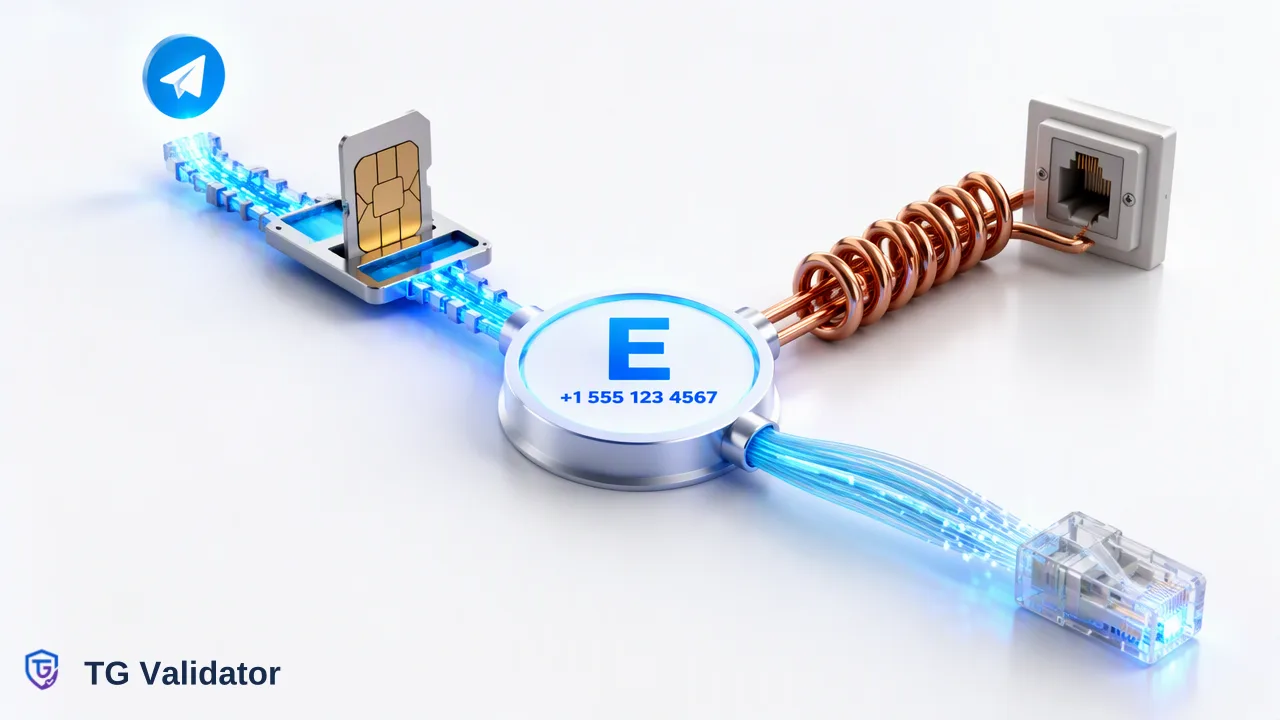
Learn the technical differences between mobile, landline, and VoIP line types, how they dictate SMS versus voice delivery, and how line type classification interacts with platform registration signals.
A phone number line type identifies the underlying telecommunications network infrastructure assigned to a specific telephone number. Categorized primarily as mobile, landline, or Voice over Internet Protocol (VoIP), this technical classification informs routing decisions by determining whether a number can natively support cellular SMS, voice-only transmission over traditional copper wires, or packet-based session initiation across data networks.
Core Definitions: Mobile, Landline, and VoIP
Telecommunications numbering plans allocate ranges across three primary network architectures:
- Mobile Numbers: Assigned to wireless carriers and linked to mobile hardware via SIM or eSIM profiles. These numbers connect through cellular radio access networks, natively supporting cellular voice, Short Message Service (SMS), and Multimedia Messaging Service (MMS). * Landline Numbers: Connected directly to the Public Switched Telephone Network (PSTN) via twisted-pair copper wiring or dedicated fiber lines terminated at a fixed physical location. These lines are engineered strictly for analog or digital voice communication and do not support native mobile protocols. * VoIP Numbers: Virtual numbers provisioned over Session Initiation Protocol (SIP) and cloud routing engines. They utilize packet-switched IP networks rather than dedicated physical connections. VoIP numbers can be hosted on cloud PBX systems, business software, or consumer messaging applications, and their messaging capabilities depend entirely on carrier-level gateway configurations.
Technical Comparison of Network Architectures
Understanding how each line type handles routing, hardware assignment, and protocol capabilities helps communication teams select appropriate outbound channels. | Attribute | Mobile Lines | Landline Lines | VoIP Lines | | :--- | :--- | :--- | :--- | | Underlying Network | Cellular Radio Access Network | Public Switched Telephone Network (PSTN) | Internet Protocol (IP) / Packet-switched | | Hardware Binding | Physical SIM or eSIM profile | Fixed physical wiring or terminal | Software client, browser, or cloud PBX | | Voice Support | Yes (Cellular / VoLTE) | Yes (Analog / TDM) | Yes (SIP / RTP) | | Native SMS Support | Yes | No | Configuration-dependent | | Location Dependency | Nomadic (towers / roaming) | Fixed physical premises | Nomadic (any global IP address) |
Why Line Type Determines Channel Selection
Communication infrastructure dictates transmission compatibility. When systems initiate outbound contacts without evaluating line type attributes, message delivery failures frequently occur. * Routing Optimization: Automated routing workflows use line type metadata to direct voice communications toward landline endpoints and redirect text interactions toward confirmed mobile endpoints. * Two-Factor Authentication (2FA) and Notifications: Dispatching critical one-time passcodes over SMS to landline numbers leads directly to delivery failures. Identifying line types prior to dispatch helps systems offer alternatives, such as voice phone calls or alternative messaging platforms. * Cost Efficiency: Carrier termination charges for SMS messages dispatched to invalid endpoints or unsupported wireline destinations generate non-refundable transit fees. Classifying numbers early in the data-intake pipeline reduces downstream dispatch expenses.
Line Type Classification vs. Platform Registration Signals
While telecommunications line type indicates the carrier infrastructure of a number, it does not reveal whether a contact can be reached on third-party messaging ecosystems. Organizations managing outreach across specialized communication platforms require platform-specific signals alongside basic carrier data. For example, TG Validator evaluates submitted E.164 phone numbers to return an account-presence signal indicating whether a number is registered on Telegram. While carrier line type confirms whether a number can accept a cellular SMS or a PSTN voice call, platform registration confirms whether the identifier is reachable through the Telegram protocol. Technical teams integrate both classification layers to build resilient communication strategies: carrier lookup tools confirm whether the number is mobile, landline, or VoIP, while dedicated registration checkers support channel-specific routing. For organizations structuring operational workflows across Telegram, reviewing the TG Validator pricing page provides details on dashboard checks and API access.
FAQ
What is the primary difference between a mobile number and a VoIP number?
A mobile number is directly bound to a physical Subscriber Identity Module (SIM) or eSIM provisioned on a cellular carrier network, providing native cellular SMS and voice connectivity. A VoIP number is a virtual identifier hosted on an IP network that transmits voice and data packets over the internet, operating independently from physical copper telephone lines or cellular towers.
Can landline numbers receive standard SMS text messages?
Standard landline numbers deployed on traditional public switched telephone networks lack native support for cellular Short Message Service (SMS) protocols. While specialized third-party services can transcribe text into synthesized voice messages, native two-way SMS delivery requires mobile infrastructure or SMS-enabled virtual numbers.
How does a platform registration check differ from line type lookup?
A line type lookup determines the underlying network architecture (mobile, landline, or VoIP) provisioned by telecommunications carriers.
Learn More
Choose the product information that fits the next step in your workflow.