
Beyond SMS: Evaluating Messaging Channels for Secure User Verification
Learn how to integrate Telegram registration checks into secure user verification messaging channels to support data hygiene and backend routing workflows.
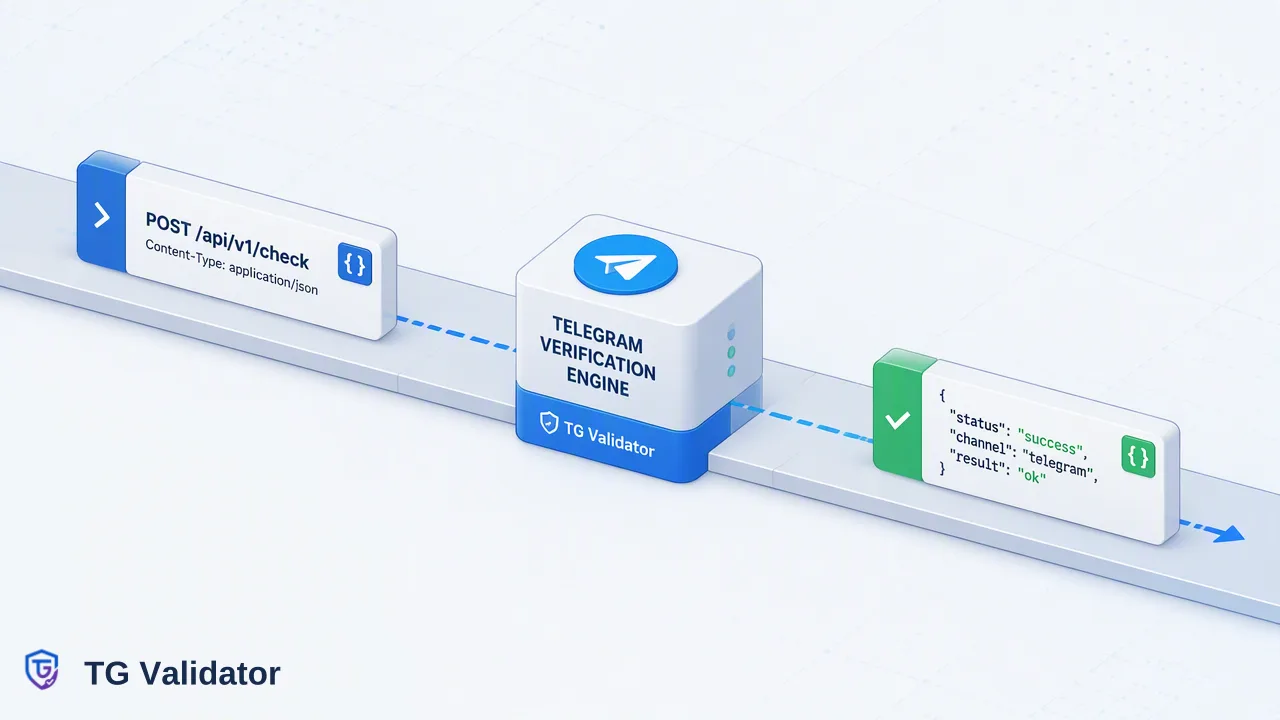
Explore how integrating synchronous Telegram registration checks into secure user verification messaging channels supports data hygiene, backend routing, and CRM segmentation.
Secure user verification messaging channels require accurate, point-in-time data to support backend routing and CRM hygiene. By integrating a synchronous Telegram registration check, organizations can verify platform account presence instantly via API. This process informs data hygiene workflows, helping teams route records appropriately while maintaining a clear distinction between a registered account and user consent. Rather than relying solely on traditional methods, incorporating a dedicated Telegram registration signal provides a focused data point that supports internal review and contact list segmentation. TG Validator provides a synchronous REST API and developer dashboard specifically designed for this purpose, offering a same-response workflow that integrates directly into existing backend systems.
The Shift Toward Platform-Specific Verification
Verification workflows are increasingly incorporating platform-specific signals to support data accuracy and inform contact list segmentation. When evaluating secure user verification messaging channels, organizations often need to know whether a phone number is associated with a specific platform before initiating outreach or updating CRM records. A Telegram registration check provides a specific account-presence signal that helps teams review their data. TG Validator is positioned as a single, focused Telegram-verification product rather than a multi-platform checker. By concentrating exclusively on Telegram registration status, the platform provides a streamlined approach to data hygiene. This focused capability supports internal decisions regarding which records to prioritize or route through specific messaging workflows. The resulting data point contributes to a broader understanding of contact list composition, helping operations managers maintain organized and segmented databases.
Understanding Synchronous Verification Workflows
A critical component of modern API integration is the method by which data is requested and returned. TG Validator utilizes synchronous verification APIs: the single-check endpoint returns one result, while the multi endpoint returns completed results for up to 100 identifiers in the same HTTP response. This same-response workflow supports immediate backend integration without the need for asynchronous polling, webhooks, or delayed jobs. When a system submits a request to the API, the connection remains open until the Telegram registration status is determined and returned. This synchronous architecture helps developers build straightforward integration pipelines where the account-presence signal is available immediately for subsequent routing logic. By avoiding asynchronous complexity, engineering teams can simplify their codebase and reduce the operational overhead associated with managing callback endpoints or tracking pending verification tasks.
Best Practices for API Implementation
Integrating the TG Validator API requires adherence to specific documented contracts to ensure successful requests. The primary integration point is the POST /api/v1/check endpoint. All API requests require an X-API-Key header for authentication and a Content-Type: application/json header.
The JSON request body must include the service_type field set to "tg" and an identifier field containing the phone number. It is a strict requirement that all submitted phone numbers be formatted according to the E.164 standard. This international numbering plan ensures that the country code and subscriber number are accurately parsed by the validation service.
Upon a successful request, the API returns a documented code, message, and data response envelope. For Telegram checks, the returned data contains service_type, identifier, and registered; internal record, transaction, status, and billing fields are not returned. Developers must also design safe client-side handling for documented error codes.
Dashboard Operations and Usage Reporting
Beyond the API, managing verification workflows requires visibility into usage patterns and account balances. The TG Validator developer dashboard supports comprehensive account management, providing tools for API key management and balance management. Operations teams can utilize the dashboard to review check history, generate usage reports, and monitor recent checks. The dashboard also displays recent balance spend and usage activity, helping administrators understand API consumption over time. Billing for the service is conducted on a per-check basis. For organizations evaluating the platform, new accounts can contact support to receive 100 free checks for Telegram registration checks before scaling their usage.
Maintaining Data Hygiene and Interpreting Results
Accurately interpreting the data returned by a verification API is essential for maintaining compliance and data hygiene. A registered result from TG Validator reports the Telegram registration status at the exact time of the check. It serves strictly as an account-presence signal. It is crucial to understand the boundaries of this signal. The signal simply informs internal review processes and supports CRM segmentation. Businesses remain entirely responsible for adhering to platform rules, obtaining necessary user consent, and ensuring that their outreach practices comply with applicable regulations. By treating the registration status as one input alongside other checks, organizations can responsibly incorporate Telegram account-presence data into their broader secure user verification messaging channels.
FAQ
What does a Telegram registration check actually verify?
A Telegram registration check verifies account presence at the time of the request.
How does synchronous verification function in this API?
The API operates on a synchronous model, meaning that one request returns one result in the same HTTP response. This same-response workflow eliminates the need for asynchronous polling or webhooks.
What format is required for submitting phone numbers?
All phone numbers submitted to the API must be formatted according to the E.164 international numbering standard to ensure accurate processing.
What fields are returned for a Telegram check?
The API returns a documented response envelope. For a completed service_type=tg check, the returned data contains service_type, identifier, and registered to indicate account presence.