
Product guidance
Data Privacy and Compliance in Phone Verification Workflows: A Guide for Developers
Explore data privacy best practices for phone verification. Learn how developers can minimize data exposure and maintain compliance using synchronous workflows.
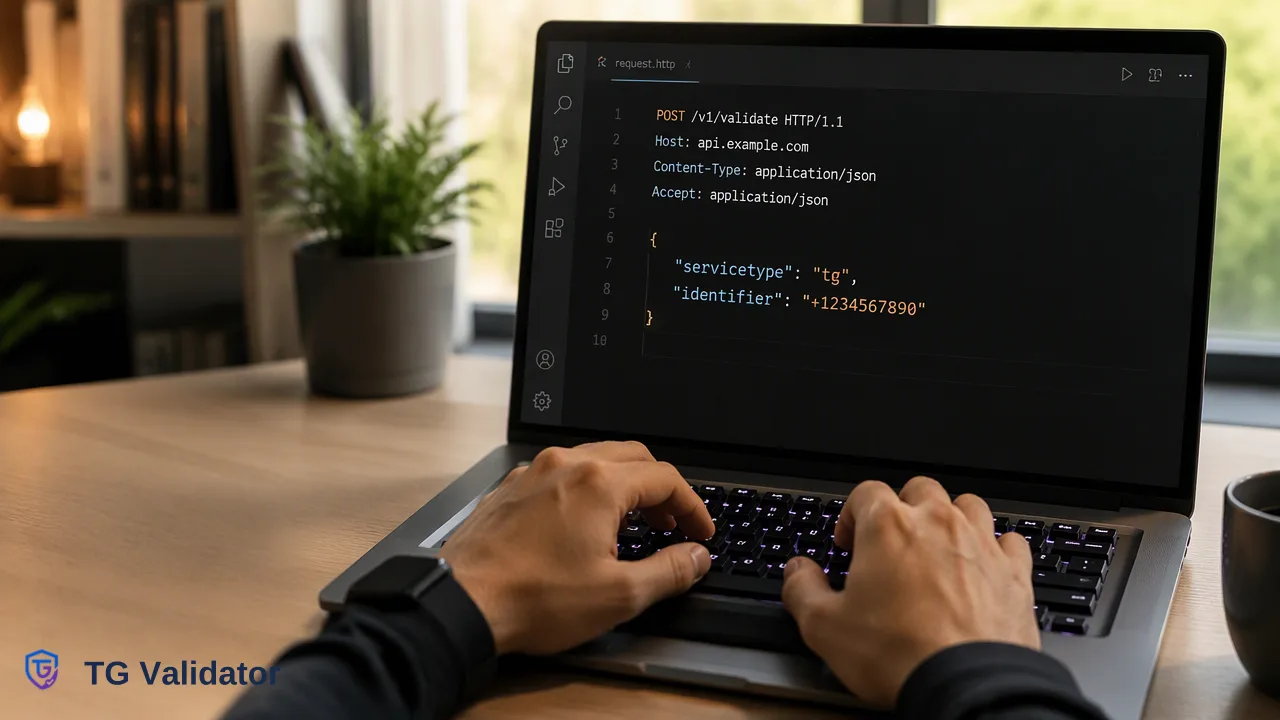
A technical guide for developers on maintaining data privacy and compliance during phone verification, focusing on data minimization, synchronous API workflows, and the distinction between data controllers and processors.
When integrating phone verification, organizations act as data controllers and must ensure that third-party verification providers operate strictly as data processors. Implementing data privacy best practices for phone verification requires strict data minimization, which means sending only the necessary identifier to the verification service and stripping all extraneous personal metadata from API requests. Because phone numbers are classified as sensitive personal data under frameworks like GDPR, teams must build secure workflows that respect user privacy. By relying on synchronous API checks and treating verification results as transient signals rather than persistent records, developers can validate platform reachability without unnecessarily expanding their data footprint.
The Privacy Landscape of Phone Verification
In modern digital infrastructure, phone numbers serve as critical routing and communication tools. However, because a phone number can uniquely identify an individual, it is classified as personal data under major regulatory frameworks such as the General Data Protection Regulation (GDPR). This classification means that any system handling, storing, or transmitting phone numbers must be designed with privacy as a foundational principle. When organizations integrate third-party services to validate phone numbers or check platform registration status, they introduce external data flows into their architecture. To support compliance, verification workflows must prioritize privacy by design. This involves mapping exactly where phone numbers travel, understanding how long they are retained by external systems, and ensuring that the transmission of this data is strictly limited to the intended operational purpose. Treating phone numbers with the same security rigor as passwords or financial data helps teams mitigate the risk of unauthorized exposure.
Defining Roles: Controller vs. Processor
A fundamental requirement for compliant data processing is clearly defining the legal roles of the entities involved in the workflow. In the context of phone verification, the business that collects the phone number from the user acts as the data controller. The controller is responsible for determining the purpose of the data collection and the means by which it will be processed. Conversely, the third-party verification provider acts as the data processor. The processor's role is strictly limited to executing the verification check on behalf of the controller. A compliant workflow requires that the processor does not repurpose the data, store it beyond the scope of the immediate check, or use it for independent commercial gain. By establishing this clear boundary, organizations can utilize external APIs to inform their internal decisions without relinquishing their governance over the personal data they collect.
Best Practices for Data Minimization in API Requests
Data minimization is the practice of limiting the collection and transmission of personal data to only what is strictly necessary to achieve a specific task. When integrating a verification API, developers must actively strip non-essential metadata before processing the request. Internal user IDs, names, IP addresses, and account histories should never be included in the payload sent to a network provider. For example, when using TG Validator to check Telegram registration status, the documented request contract enforces strict data minimization. Developers send a POST request to /api/v1/check using the X-API-Key header and a Content-Type: application/json header. The JSON body requires only two fields: {"service_type": "tg", "identifier": "<E.164 number>"}. Numbers must be submitted in E.164 format to ensure accurate processing. By restricting the payload to this standardized identifier and the target service type, teams ensure that no extraneous personal metadata is exposed to the processor. The public data object returned contains only service_type, identifier, and registered, keeping the entire data exchange tightly scoped.
Secure Workflow Integration and Synchronous Processing
The architectural design of a verification API significantly impacts its privacy footprint. Synchronous verification avoids the need for persistent storage of sensitive identifiers in intermediate queues. TG Validator operates as a synchronous product: a single-number request returns one result in the same HTTP response. For operations requiring higher throughput, a synchronous batch endpoint accepts up to 100 identifiers in one request and returns the whole batch or fails as a whole in that same response. Because this is not a task-submission, polling, callback, or download workflow, developers do not need to build complex webhook listeners or temporary databases that might inadvertently store personal data longer than necessary. The outer response envelope for a completed check consists simply of code, msg, and data. By processing the result immediately in memory and discarding the raw API response, teams can treat verification results as transient signals, further aligning their technical implementation with data minimization principles.
Interpreting Verification Signals Compliantly
Maintaining compliance also requires organizations to accurately interpret and scope the data they receive. Overstating the meaning of a verification result can lead to improper data handling or flawed automated decision-making. The public check contract states that the tg service returns this registration status in the data.registered field as a boolean value. By understanding that this is strictly an account-presence signal, organizations can use it to inform internal routing or review workflows without falsely categorizing the signal as verified identity data.
Managing API Usage and Error Handling Securely
Robust error handling is a critical component of a secure integration. When an API request fails or times out, the system must fail securely without logging sensitive identifiers in plain text or misinterpreting the failure as a valid data point. The public API documentation for TG Validator describes per-user concurrency and timeout controls. Concurrency-limit rejections are returned before a check is created and create no completed check result. Furthermore, if a check cannot be decided, the API returns a non-zero business code and no completed result object. Developers must ensure their applications parse these non-zero business codes correctly rather than assuming an undetermined check implies a lack of registration.
FAQ
Why are phone numbers considered personal data in verification workflows?
Phone numbers are unique identifiers that can often be linked directly to an individual. Under privacy frameworks like GDPR, any data point that can identify a person is classified as personal data, requiring organizations to apply strict privacy controls, data minimization, and secure processing protocols when handling them.
What is the difference between a data controller and a data processor?
A data controller is the entity that determines the purpose and means of processing personal data, such as a business collecting a user's phone number. A data processor is a third-party entity, such as a verification API provider, that processes the data strictly on behalf of and under the instructions of the controller.
How can development teams minimize data exposure when using a verification API?
Teams can minimize data exposure by stripping all non-essential metadata—such as names, email addresses, or internal user IDs—from their API payloads before transmitting data. The request should only contain the exact identifier required by the provider, formatted correctly, to ensure no extraneous personal information is shared.
How does a synchronous API response support data privacy?
A synchronous API returns the verification result in the same HTTP response as the request. This same-response workflow eliminates the need for asynchronous task queues, polling mechanisms, or callback webhooks, reducing the number of places where sensitive identifiers might be temporarily stored or exposed during processing.
What format should phone numbers use to ensure accurate processing?
Phone numbers must be submitted in E.164 format. This standardized international format ensures accurate routing and processing, which helps prevent validation errors and supports efficient data handling.