
From Deno to Cloudflare: How Infrastructure Consolidation Impacts Your API Workflow
Explore how infrastructure consolidation affects API reliability, and learn how to manage concurrency, timeouts, and resilient integration workflows.
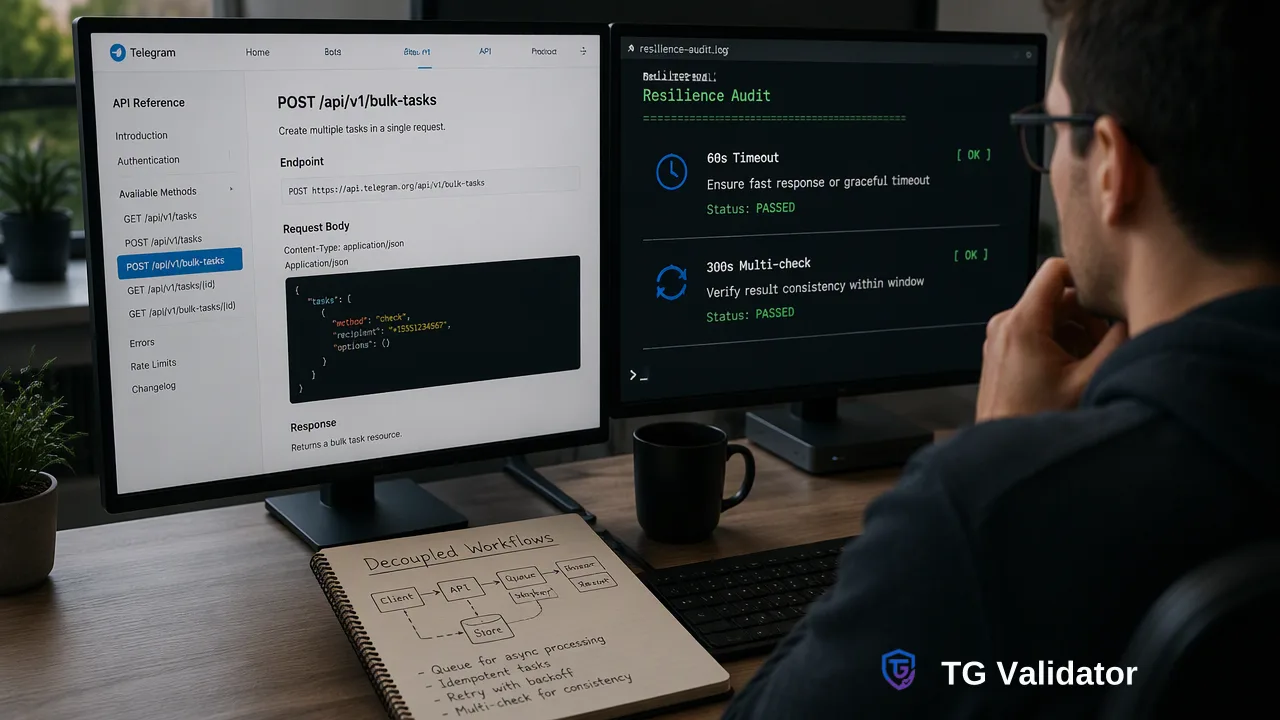
Infrastructure consolidation across developer toolchains and hosting platforms highlights the need for resilient integration patterns. This guide provides a technical audit framework focusing on concurrency controls, predictable timeouts, and decoupled workflows to maintain API reliability.
Major infrastructure consolidation, exemplified by platform acquisitions across runtimes and hosting layers, signals an industry shift toward unified execution environments. For engineering teams, these structural transitions introduce potential volatility into upstream dependencies. Maintaining API reliability requires decoupling business logic from underlying platform shifts through explicit concurrency governance, systematic timeout configurations, and defensive request handling. By auditing integration parameters and adhering to documented concurrency models, teams establish predictable operational boundaries regardless of changes within external hosting ecosystems.
The Impact of Infrastructure Consolidation on API Reliability
The strategic consolidation of development toolchains, execution runtimes, and distributed hosting networks alters the assumptions engineering teams make about external dependencies. When independent platforms merge into unified environments, underlying deployment fabrics, egress routing, and scheduling layers undergo structural adjustments. Even subtle modifications to runtime environments can cascade downstream, introducing jitter, shifting connection thresholds, and exposing fragility in external service integrations.
API reliability depends on insulating critical data pipelines from these environmental shifts. Engineering architectures that assume infinite bandwidth or static upstream latency remain vulnerable to unexpected connection drops and queuing bottlenecks. Decoupling vital processes requires developers to evaluate external platform contracts based on their documented operational boundaries rather than temporary platform behaviors. Establishing a resilient connection pipeline requires strict interface discipline, defensive error trapping, and systematic resource management.
Auditing Your Integration Strategy for System Predictability
A comprehensive integration audit examines how client services dispatch payloads, process synchronous results, and isolate failure domains. When hosting infrastructures merge, assumptions regarding request quotas and parallel capability must be retested. System predictability emerges from designing integrations that behave consistently under variable network conditions.
Teams auditing their external communication layer should evaluate several core operational dimensions:
Client-Side Concurrency Throttling: Workflows must regulate how many parallel sockets or workers dispatch tasks simultaneously, avoiding sudden request spikes that trigger upstream defensive throttling.
Granular Execution Budgets: Each transaction requires discrete timeout thresholds matched to its data complexity, ensuring that hung sockets terminate predictably.
Deterministic Status Parsing: Downstream handlers must evaluate structured response envelopes and documented status codes, treating unexpected network interruptions as distinct workflow events.
Decoupled Data Verification: Verification checks—such as validating platform registration data—should run through standardized API abstractions rather than platform-specific runtime dependencies.
Managing Concurrency and Timeouts for Resilient Workflows
Concrete integration controls are visible in standardized checking workflows, such as those provided by TG Validator for Telegram account verification. The public TG Validator API documentation defines clear operational constraints designed to preserve system balance: each user account maintains a limit of five in-flight checks, with timeout thresholds established at 60 seconds for a single check and 300 seconds for a multi check. Furthermore, only one multi check runs per account at any given time.
| Control Type | Documented Specification | Operational Benefit |
|---|---|---|
| In-Flight Concurrency | Maximum of 5 concurrent checks | Prevents client-side socket depletion and server overload |
| Single-Check Timeout | 60 seconds execution window | Frees client resources promptly if an endpoint degrades |
| Multi-Check Timeout | 300 seconds execution window | Accommodates batch payload evaluations predictably |
| Multi-Check Concurrency | Single active execution per account | Sequences intensive tasks to maintain system throughput |
Rather than publishing a fixed per-minute request-rate limit, service providers require teams to consult current API documentation for usage policies. Adhering to these documented concurrency boundaries stabilizes client throughput, enabling high-volume operational checks to function smoothly amidst broader infrastructure evolution.
Architectural Best Practices for Decoupled Workflows
Building resilient systems amidst continuous industry consolidation requires structuring integrations to absorb upstream shifts smoothly. Applications processing registration verifications or high-frequency validation signals can apply specific structural patterns to reinforce reliability.
Synchronous and Asynchronous Workload Separation
Direct user-facing interactions benefit from synchronous single-record endpoints like POST /api/v1/check or synchronous small batches via POST /api/v1/batch-check. These calls yield immediate reachability signals within the documented response envelope. Conversely, background data pipelines handling extensive volume should adopt asynchronous task patterns. Using POST /api/v1/bulk-tasks allows systems to queue validation jobs, check processing status through GET /api/v1/bulk-tasks/{id}, and retrieve comprehensive results without tying up real-time application threads. Per-product file constraints and volume limits apply to asynchronous tasks, as detailed in the current API documentation.
Defensive Error Encapsulation
External platform transitions frequently introduce altered HTTP status codes or temporary connection resets. Production code should isolate upstream calls within circuit-breaker patterns. When an API check produces an undecided or non-zero business code, the application should route the affected transaction into an internal review pipeline rather than halting the broader workflow. Telegram registration signals provide account-presence verification at check time, offering critical input for routing and filtering without making unsupported assumptions regarding live user activity or user identity.
By codifying concurrency caps, tuning timeout budgets, and separating synchronous checks from asynchronous file jobs, engineering teams insulate their applications from hosting volatility and ensure long-term architectural stability.
FAQ
How can teams ensure API reliability during infrastructure transitions?
Teams maintain stability by isolating core data operations behind clear client-side abstractions. Key tactics include auditing upstream rate parameters, enforcing strict client timeouts, handling response codes deterministically, and preventing unbound concurrent execution from exhausting local or remote connection pools.
Why are concurrency controls important for API workflow stability?
Concurrency controls prevent request flooding and resource starvation on both the client and provider side. Establishing defined limits on in-flight requests, such as managing a maximum of five simultaneous checks, stabilizes throughput, preserves memory, and avoids cascading connection failures when external runtimes experience latency spikes.
What role do timeout settings play in managing API dependencies?
Predictable timeouts prevent client execution threads from hanging indefinitely during downstream network degradation. Differentiating timeout durations based on payload complexity—for example, allocating 60 seconds for single-record evaluations and 300 seconds for multi-record operations—ensures client systems release blocked resources and handle retries cleanly.
Learn More
Choose the product information that fits the next step in your workflow.